


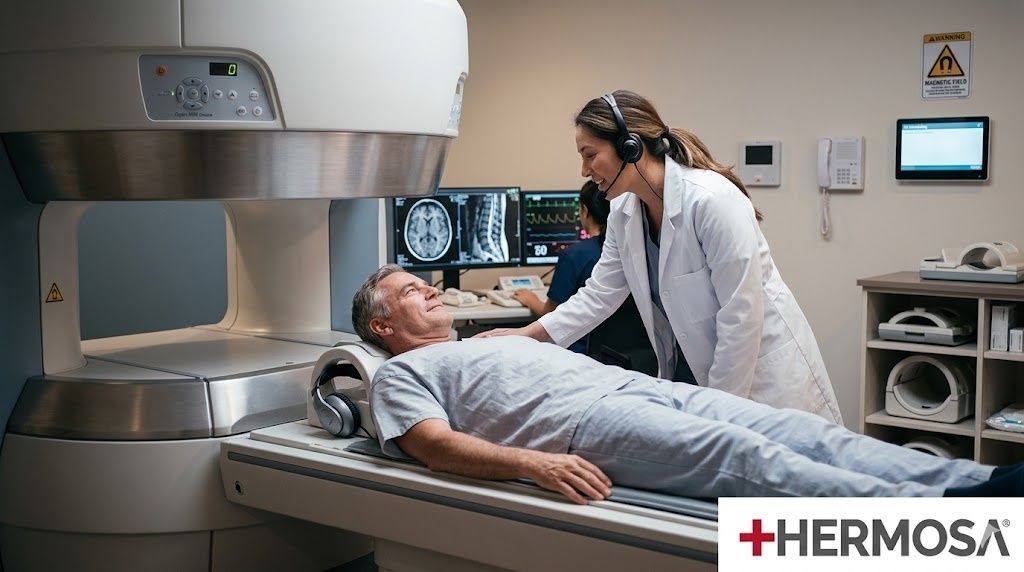
How to Prepare for an MRI Scan at Hermosa Medical Center in Chicago
How to Prepare for an MRI Scan at Hermosa Medical Center in Chicago
Getting your first MRI can feel like a big deal. Maybe your doctor just ordered one and now you're sitting at home with a list of questions. That's normal. Plain and simple an MRI scan is one of the safest and most detailed imaging tests in modern medicine and once you know how to prepare for an MRI most of the worry goes away.
Magnetic resonance imaging is a diagnostic tool that helps doctors see what's happening inside your body without making you sit through any kind of ionizing radiation. It uses a magnetic field and radio waves to create pictures of your organs and tissues. At Hermosa Medical Center on Pulaski Road in Chicago we've walked patients through this exact moment for more than thirty three years and our on site Open MRI makes the experience easier than what you'd find at most community clinics.
Here's the thing. Knowing what to expect ahead of time is half the battle.
Reviewed by the Hermosa Medical Center Radiology Team
This article reflects how our imaging team handles the daily MRI workflow at our Chicago diagnostic center. We work with patients sent in by cardiologists internists gynecologists and primary care providers across the northwest side. Care happens in English Spanish and Arabic so nobody has to nod through medical instructions they don't fully follow. For more on our on site MRI capability see our Open MRI imaging service page.
When a Doctor Orders an MRI
So when does a doctor order an MRI in the first place?
Most of the time your health care provider will ask for this kind of scan when they need a closer look at something they can't see well on basic tests. That includes back pain that won't go away. Knee or shoulder injuries. Headaches that don't add up. Suspected tumors. And problems with the brain and spinal cord.
Doctors also use MRI to diagnose and monitor long term conditions like multiple sclerosis. Sometimes they want to compare a new scan to an older one to track how a condition is changing.
If you're not sure why your provider ordered the scan it's totally fine to ask before your mri appointment. Your health care team should walk you through it without making you feel rushed.
How MRI Work
You might be wondering how MRI work in the first place. Short version. An MRI machine uses powerful magnets and radio waves to take pictures of your body. The mri machine creates a strong magnetic field around you. That strong magnetic field interacts with the water molecules in your tissues. Radio waves then nudge those molecules and the mri scanner reads the signals coming back and turns them into mri images on a computer.
The technique used is completely different from an x ray or a ct scan. The mri uses a magnetic field and radio waves rather than radiation. So if you've had concerns about scans that use ionizing radiation MRI is the imaging test that skips that entirely.
What you get at the end is detailed images of soft tissue. The kind of clarity you simply can't pull from other types of medical imaging.
MRI vs CT Scan Differences
People mix these two up all the time. So let's clear up the MRI vs CT scan differences.
A CT scan uses x ray technology and produces images fast. It's the go to choice in emergency rooms for trauma broken bones and chest issues. It does use ionizing radiation.
An MRI uses magnet and radio waves not x rays. The type of scan takes longer but it gives much sharper pictures of soft tissue. Think brain and spinal cord. Muscles. Ligaments. Organs and joints.
Both are diagnostic tests with real value. The right one depends on what your doctor needs to see. A primary care clinic in Chicago can help you figure out which type of scan fits your situation before any imaging is ordered.
Quick side by side.
| Feature | MRI | CT Scan |
|---|---|---|
| Technology | Magnetic fields and radio waves | X rays |
| Radiation | None | Yes |
| Best for | Soft tissue brain spine joints | Bone trauma lungs emergencies |
| Scan time | 20 to 60 plus minutes | Under 10 minutes |
| Noise level | Loud | Quiet |
| Cost | Higher | Lower |
Open MRI vs Closed MRI
Now the type of mri available to you. The choice usually comes down to open MRI vs closed MRI.
A closed MRI is the classic tunnel style scanner. The quality of the images is excellent but the bore is narrow. People who suffer from claustrophobia often find it tough.
An open MRI or wide-bore mri is built differently. It's open on both ends and the sides too which removes that boxed in feeling. The table that slides into the magnet feels more like a bed and there's much more room around your head and shoulders.
| Feature | Closed MRI | Open MRI |
|---|---|---|
| Bore design | Narrow tunnel | Open on the sides and both ends |
| Claustrophobia friendly | Often difficult | Far easier |
| Image strength | Very high | Strong for most general scans |
| Weight tolerance | Lower | Higher |
| Pediatric comfort | Harder | Easier |
The on site MRI at Hermosa Medical Center was set up exactly for patients who'd been avoiding scans for years because of fear. People finally get the answers they need without the panic.
How to Prepare for an MRI
Alright. Real prep starts here. What to do before your appointment.
- Wear comfortable clothing on the day of the scan. Soft pants and a cotton shirt work well. Clothing without zippers buttons or any metal objects is best because anything metallic has to come off before the scan.
- Most clinics will ask you to change into a hospital gown anyway. So you'll get a clean gown and a locker for your belongings.
- Leave valuables at home. Watches rings necklaces and even a small hairpin can interfere with the magnet. Hearing aids come out too.
- Tell your mri technologist about any implant or any devices in your body before you go in. That covers a pacemaker cochlear implants insulin pumps surgical clips or old metal fragments from an injury. Some modern implants are MRI safe but every device has to be checked first.
- Mention any medical conditions like kidney disease especially when contrast is needed.
- If you've had reactions to the contrast dye before flag that too. Same with pregnancy. Same with severe anxiety.
A small personal note here. The patients who have the easiest time are the ones who ask their questions ahead of time and arrive a few minutes early. The ones who feel rushed feel everything else more too.
Can I Eat Before MRI
People ask this constantly. Can I eat before MRI?
For most scans yes you can eat and drink normally. The exceptions are MRI of the abdomen pelvis or bile ducts and any scan where you'll receive contrast. In those cases your provider may ask you to fast for four to six hours.
If you have a cardiac MRI scheduled skip caffeine for twenty four hours before the scan. Caffeine affects heart rate readings.
When in doubt call the clinic before your appointment.
What to Expect During MRI
Here's what to expect during MRI from start to finish.
You'll arrive and check in at the front desk. The team will run you through a safety form to confirm no metal objects or contraindicated implants. Then you change into a hospital gown and store your things in a locker.
Once you're ready the mri technologist takes you into the exam room. The mri scanner is large and might look a little intimidating at first. But it's a calm and controlled environment. You'll lie down on the table that slides smoothly into the machine. A coil which is basically a small antenna sits over the body being examined.
The technologist gives you earplugs or a headphone. You can listen to music during the mri exam and honestly that one detail helps a lot of people get through it. Throughout the procedure you'll hear loud noise. Thumping tapping and buzzing. That's the machine working not breaking. Promise.
A squeeze ball is placed in your hand. If you need to stop or talk to the team you press it. The technologist watches you the whole time through a window and can speak to you over an intercom.
The mri procedure itself is painless. If contrast is needed you'll get a small IV. You might feel a quick cool sensation when the contrast injection goes in. That's normal.
How Long Does MRI Take
So how long does MRI take? It depends on the type of mri and the body being examined.
Most scans run between twenty and sixty minutes. A knee MRI might wrap up in thirty. A brain MRI runs forty to sixty. Cardiac MRIs can stretch to ninety. Plan on being at the clinic for at least an hour total once you factor in paperwork changing and post scan checkout.
Once the scan is complete you can usually head home right away unless you got contrast in which case the team may keep you back for a short observation window.
MRI Claustrophobia Tips
Let me speak directly to anyone reading this who feels nervous. Plain and simple. If you suffer from claustrophobia you're not alone. A lot of people do. And the truth is there are real MRI claustrophobia tips that work.
Tips to help you stay calm and feel less anxious during your scan.
- Pick an open MRI when you can. That alone solves most of the problem.
- Close your eyes before the table slides in and keep them shut. What your brain doesn't see it doesn't react to.
- Ask for a cloth over your eyes. Sounds small. Makes a huge difference.
- Use the headphone the team offers. Listen to music or a podcast you love.
- Breathe slowly. In through the nose for four counts. Out through the mouth for six.
- If you're severely claustrophobic ask your provider about a single dose of mild anti anxiety medication taken before the scan. Doctors prescribe this routinely.
- Bring someone with you. Knowing a friend is in the waiting room is enough to settle most nerves.
The patients who tell us they feel less anxious after the first ten minutes inside the scanner almost always say the same thing. They closed their eyes. They listened to something they liked. They breathed slow.
MRI Scan What It Shows
Now the question that probably brought you here. MRI scan what it shows depends on the body part being scanned but the range is huge.
For the head MRI gives detailed images of areas of the brain. Doctors use it to spot tumors strokes multiple sclerosis aneurysms and bleeds.
For the spine MRI shows the spinal cord disc problems nerve compression and inflammation.
For joints it shows torn ligaments meniscus tears cartilage damage and tendon injuries.
For the abdomen and pelvis it picks up liver kidney pancreas and reproductive system issues.
The quality of the images is what makes MRI so useful. You see soft tissue in a way no other imaging test can match.
MRI With or Without Contrast
Sometimes your doctor will order an MRI with mri contrast. Other times mri without contrast is all that's needed.
The contrast agents used are usually gadolinium-based contrast which sharpens visibility of certain tissues and blood vessels. The dye gets injected through a vein during the scan.
For most healthy patients reactions to the contrast are minor. A warm flush. A metallic taste. Both pass quickly. Patients with kidney problems may need a blood test first before they can receive contrast.
What Happens After an MRI
So what happens after an MRI? Honestly not much. You change back into your clothes pick up your valuables and head out.
A radiologist reviews your scan and writes a report within twenty four to seventy two hours. Your ordering doctor then walks you through the findings.
If you're wondering about MRI results how to read them yourself don't try. Radiology reports use technical language and even radiologists train for years to read these scans correctly. Wait for your follow up. Ask questions. Bring a notepad. That's the smart move.
If something needs follow up our internal medicine doctors and cardiac diagnostic services at Hermosa can keep your care moving without sending you to another building across town.
MRI Cost With Insurance
Let's talk money. MRI cost with insurance varies depending on the body part the type of scan and whether contrast is involved. With insurance most patients pay a copay or coinsurance after meeting their deductible. Without insurance an MRI can run from around four hundred dollars up to thirty five hundred dollars.
At Hermosa Medical Center we accept Medicare Medicaid Blue Cross Blue Shield Aetna Cigna Tricare Wellcare and RR Medicare. Cash and CareCredit financing are available too.
Before your scan our health care team will verify your coverage and give you a clear out of pocket estimate. No surprise bills at the end.
Common MRI Mistakes to Avoid
A few avoidable mistakes pop up over and over.
Wearing a bra with underwire or pants with a metal zipper. Forgetting to mention a small medical implant from years ago. Drinking espresso right before a cardiac MRI. Skipping fasting instructions when contrast is needed. Showing up in a panic instead of telling the clinic about your claustrophobia ahead of time. Searching MRI results how to read on the internet at 2 AM and convincing yourself you have something rare.
Ask questions before the scan. Not during.
Why Choose Hermosa Medical Center
For more than thirty three years Hermosa Medical Center has served Chicago families on the northwest side. We've built our diagnostic center around making care easier. That means walk in clinic hours. A multi specialty team. And on site Open MRI you don't need to drive across town for.
If you'd like to talk to someone about your scheduled MRI or any health tips related to upcoming testing call us at 773 772 8876 or come in during business hours.
Benefits of Hermosa Medical Center
What makes us different in plain English.
- On site Open MRI you can access without a hospital referral
- Walk in hours 9 AM to 5 PM Monday through Friday
- Care in English Spanish and Arabic
- Most major insurance plans accepted
- Cash and CareCredit options for those without coverage
- Multi specialty care under one roof including cardiology gynecology internal medicine primary care psychiatry urgent care and dentistry
- Same day scheduling when slots are open
- A team that's been part of the Hermosa neighborhood for decades not corporate newcomers
Patient Experiences We've Seen
A few short stories worth sharing. Names changed and details kept general.
One patient came in for her first mri after putting it off for two years. Severe claustrophobia. She'd cancelled scans at a hospital twice. Open MRI changed things. Forty minutes start to finish and she walked out with a diagnosis that finally explained her back pain.
Another patient. Father of three. Weekend basketball injury and a torn ligament suspected. Same day MRI same day report. Surgical consult booked within forty eight hours.
A Spanish speaking patient who'd avoided medical imaging at a previous clinic because of language gaps got her pelvic scan done here with a bilingual team. Comfort makes a real difference.
These kinds of outcomes are the reason our clinic still feels like a neighborhood place after three decades.
FAQ
Is an MRI safe?
Yes. MRI doesn't use ionizing radiation so there's no x ray exposure. Patients with certain devices in your body like a pacemaker need a safety check first but most modern implants work fine with MRI.
Can I eat before MRI?
For most scans yes. For abdominal pelvic or contrast scans you may need to fast four to six hours. The clinic will tell you when you book your mri appointment.
How long does MRI take?
Most scans run twenty to sixty minutes. Cardiac MRI can take ninety. Plan on an hour at the clinic in total.
What's the difference between MRI vs CT scan?
CT uses x rays and is fast and great for bones. MRI uses magnetic fields and radio waves and shows soft tissue in much sharper detail. Different tools for different jobs.
What if I'm claustrophobic?
Open MRI handles this for most people. Music headphones eye covering and slow breathing all help too. Your doctor can prescribe a mild calming medication if needed.
Do I need a referral for an MRI?
Yes. An MRI is a prescription diagnostic test. If you don't have a provider you can see one of our doctors first and the order can be placed the same day if appropriate. Book your MRI appointment online or call us.
Wrapping Up
Preparing for your MRI doesn't have to be stressful. Once you know what's coming the scan itself feels small. If you have questions or concerns about a scheduled MRI or you're looking for a clinic with on site Open MRI in Chicago we're here to help. Call 773 772 8876 walk in to 2004 N Pulaski Road or get directions to Hermosa Medical.
This article is for general health information and is not a substitute for personalized medical advice.
Follow Hermosa Medical Center
Facebook: https://web.facebook.com/Hermosa.Medical