


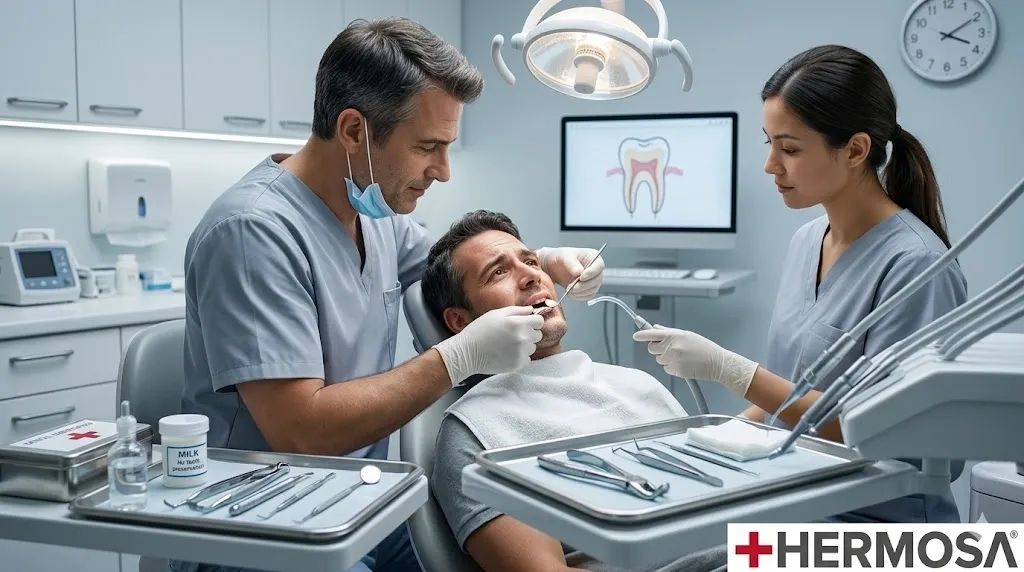
What to Do in a Dental Emergency: A First-Response Roadmap for Knocked-Out Teeth Toothache and Broken Teeth
What to Do in a Dental Emergency: A First-Response Roadmap for Knocked-Out Teeth Toothache and Broken Teeth
It's a Saturday afternoon. Your kid takes a soccer ball to the mouth and a front tooth lands in the grass. Or it's 11 PM on a Tuesday and a sharp toothache that's been quietly growing for weeks finally hits you in waves you can't sleep through. So what do you do.
Knowing what to do dental emergency situations is one of those things you don't think about until you're already in one. And by then panic isn't your friend. Here's the thing. A dental emergency requires immediate attention sometimes within minutes if you want to save a tooth. Other dental problems can wait until business hours. The trick is knowing the difference. At Hermosa Medical Center on Pulaski Road in Chicago our dental team has handled emergencies in this neighborhood for more than 33 years and we're going to walk you through what really matters. Plain and simple. The American Dental Association publishes solid health information on this and we'll borrow a few of those protocols too.
Reviewed by the Hermosa Medical Center Dental Team
This article reflects how our dental team coordinates with our medical providers during dental emergencies. We provide care in English Spanish and Arabic. Our dentistry team also works with our urgent care providers and our on site pharmacy so a single emergency visit doesn't turn into three separate appointments. For more on our dentistry in Chicago services and dental program see our dentistry page.
What Counts as a Dental Emergency
Not every dental problem is an emergency. A lot of patients call us in a panic over things that can safely wait. So let's settle this first.
A true dental emergency has at least one of three signs. Severe pain you can't control with home measures. Active bleeding that doesn't stop after 10 minutes of pressure. Or visible damage like a tooth that's been knocked out cracked badly or broken with sharp edges cutting your tongue.
For a lot of patients experiencing a dental emergency this comes with a side of fear. That's normal. The truth is most situations can be stabilized at home long enough for you to get to a dentist. A few really do mean go to the emergency room first. Knowing which one you're in matters.
If you can sleep through the night without medication it's probably not an emergency. If you have facial swelling that's spreading or you're having trouble swallowing or breathing it's not a dentist visit anymore. It's an ER visit.
Common Dental Emergencies and Their Causes
So what are the most common dental emergencies and the causes of dental emergencies we see most often. Sports injuries top the list. Falls. Biting down on something hard like an olive pit or a piece of bone. Untreated decay that finally cracks open into pain. Old fillings that fail. Gum infections that flare up overnight.
Here's a quick reference for what counts as what.
| Emergency Type | Common Cause | How Urgent |
|---|---|---|
| Knocked-out tooth | Sports trauma falls accidents | Within 30 minutes |
| Broken or cracked tooth | Biting hard food or trauma | Same day |
| Severe toothache | Decay infection cracked filling | Same day |
| Lost filling or crown | Old restoration failing | 1 to 2 days |
| Dental abscess swelling | Untreated infection | Same day or ER |
| Soft tissue injury (lip tongue cheek) | Trauma or biting | 30 minutes if bleeding doesn't stop |
| Object stuck between teeth | Eating | Gently use dental floss then dentist if it stays |
Dental injuries from contact sports are the cause we see most in younger patients. Adults more often come in for infections that occur around an old filling or a tooth that finally cracks under the pressure of years of grinding.
Knocked-Out Tooth: What to Do in the First 30 Minutes
This is the emergency where minutes matter most. If a permanent tooth gets knocked out you have about 30 minutes to an hour to get it back in place with the best chance of saving it. So if you take one thing away from this article let it be this.
Here's exactly what to do.
- Find the tooth. Hold it by the crown which is the white chewing part. Never touch the root. Touching the root damages the cells that allow re implantation.
- Don't scrub the tooth. Don't remove any attached tissue. Those cells you can see on the root are what make re attachment possible.
- If the tooth is dirty give it a gentle 10 second rinse with milk or saline. Plain warm water works only if you have nothing else and only briefly.
- Try to put the tooth back in its socket. Push it in gently with your fingers using a mirror. Bite down softly on a piece of clean cloth to hold it in place.
- If you can't get the tooth back in put it in a small container of milk. Milk preserves the root cells better than water. Saline works. Saliva works. Water is a last resort because it kills the cells fast.
- Get to a dentist right away. Contact your dentist immediately and explain what happened. Most dental offices keep emergency slots for exactly this.
Knocked-out teeth in adults can often be saved if you move fast. Baby teeth are different and usually not re implanted because of how they affect the permanent tooth coming in behind them. If your child knocks out a baby tooth still call your dentist same day for a checkup but don't try to put the tooth back.
A small honest note from years of seeing these. The parents who panic least save the most teeth. Have a plan in your head before it happens.
Toothache Emergency Care
A toothache is the most common reason patients walk in unannounced. Toothache emergency care isn't about killing the pain forever. It's about figuring out if you need to see your dentist today or if you can hold things together until your appointment.
Try rinsing your mouth with warm salt water first. Rinse the mouth with warm water and a teaspoon of salt for 30 seconds and spit. You can also rinse your mouth with a mild antiseptic rinse if one is on hand. This pulls down some inflammation and clears trapped food that might be jabbing the aching tooth. Gently use dental floss to remove anything caught between the gums near the aching tooth. Sometimes that alone solves the whole problem.
If pain stays apply a cold compress to the outside of your mouth where the tooth hurts. Hold a cold compress in 15 minute on 15 minute off cycles. Over the counter pain relievers help when used per package directions. Never put aspirin directly on the gum or against a tooth. Aspirin is acidic and causes chemical burns to soft tissue. The pill needs to be swallowed not placed.
Some patients try a tea bag pressed against the painful area. Black tea has tannins that can settle minor inflammation. It's not a fix but it can buy you a few hours of relief.
Watch for these warning signs that mean stop waiting and go to the hospital emergency room. Fever above 101. Swelling that's spreading up the face or down the neck. Trouble swallowing or breathing. Any of those mean infection has moved beyond the tooth and you need emergency care urgently not a regular appointment.
For everything below those red flags see your dentist right away the next morning. A toothache that's keeping you up at night doesn't get better by ignoring it.
Cracked or Broken Tooth Emergency
A broken tooth emergency feels worse than it usually is. The cracked tooth treatment depends on what kind of crack and where it is.
A small chip with no pain can wait a few days. A crack that goes deep enough to expose the inner tooth hurts especially with hot or cold and needs same day care. A tooth that's split or broken in pieces is a true emergency.
Right after it happens rinse your mouth with warm water gently. Rinse any broken pieces too and save them in a small container of milk just in case the dentist can use them. If you bit your lip near the tooth and there's bleeding apply pressure with a clean cloth for 10 minutes. Apply a cold compress on the outside of your mouth to keep any swelling down.
If a dental crown comes off save it. A dentist can sometimes re cement the same crown if it's still in good shape. Don't try super glue or DIY cement. Real dental cement from a pharmacy is fine as a stopgap for a day or two but the dental treatment still needs to happen.
For a broken tooth emergency contact your dentist immediately for a same day slot. If your dentist's office is closed our walk in clinic can stabilize things until you can get to a dental professional.
Lost Filling: What to Do Until You See a Dentist
A lost filling is the least dramatic emergency on this list but it still needs attention. The exposed tooth surface is more vulnerable to decay and sensitivity. Lost filling what to do honestly comes down to protecting the area until the dentist can take care of the problem.
Pharmacy dental cement is a safe short term cover. Sugar free gum works in a pinch though it's not pretty. Keep that side of your mouth out of hard or sticky foods. Brush the area gently. Make an appointment with your dental office for the next available slot during business hours. One to two days is reasonable. Beyond that you risk new decay starting underneath.
For a lot of patients a lost filling is the first sign that an older restoration is breaking down. The dentist may suggest replacing it with something more durable or moving up to a dental crown depending on how much tooth is left.
Dental Abscess and Swollen Gum: Why Home Treatment Is Risky
This is the section where I have to be honest with you. People search for dental abscess treatment at home all day long. The truth is there isn't a real one. A dental abscess is a bacterial infection that creates a pocket of pus around the root of a tooth or deep in the gum. Left untreated the infection can spread to the jaw the bloodstream the sinuses and in serious cases the brain.
Infections that occur around the root of a tooth need professional treatment. A dentist drains the abscess and prescribes antibiotics. There's no home version of that.
What you can do at home while you wait for the appointment is keep yourself comfortable. Warm salt water rinses help with surface discomfort. Over the counter pain medications used per the package help with pain. Sleep with your head elevated to reduce throbbing.
What you cannot do is wait it out. Symptoms quieting down doesn't mean the infection is gone. It often means it's just spread deeper. Seek emergency dental care the same day. If you have facial swelling especially around the eye fever difficulty swallowing or any sign that the infection is moving go to the hospital emergency room. That's not a dentist visit anymore. That's an emergency room for serious infections that can take a life if ignored.
A swollen gum without an abscess can be less serious. Trapped food a brushing injury or gingivitis flare ups all cause swelling that calms down with better hygiene and time. Swollen gum treatment at home means warm salt rinses gentle brushing and flossing the area daily. If swelling doesn't improve in 2 or 3 days that's your sign to see a dentist.
Dental Pain Relief Fast: Safe Steps Before You Get Care
Dental pain relief fast isn't really fast. Pain that severe usually means something the dentist needs to fix. But there are bridge tactics that can help you get through the hours until you're seen.
A cold compress against the cheek 15 minutes on 15 minutes off. Warm salt water rinses every couple of hours. Over the counter pain meds at the recommended dose on the package. Sleeping with your head elevated. Soft cool foods only. Clove oil dabbed on the gum with a cotton swab is a traditional remedy with some real evidence behind it.
If there's bleeding from a tooth socket use a moistened piece of gauze. Apply pressure by biting down on the moistened piece of gauze for 20 minutes straight no peeking. Most bleeding stops in that window. If it doesn't stop after a second 20 minute round you need professional care.
A small note here. People try heat on the face thinking it'll soothe a sore tooth. It usually doesn't. Heat can worsen an infection by increasing blood flow to it. Stick with cold.
Urgent Dental Care vs ER: Where to Actually Go
When you're experiencing a dental emergency the next question is where to go. Urgent dental care vs ER is a real decision and the right answer depends on what's happening. Below is the simplest version.
| Situation | Best Place to Go | Why |
|---|---|---|
| Knocked-out permanent tooth | Emergency dentist | Re implantation window |
| Severe toothache no swelling | Urgent care or same day dentist | Diagnosis plus prescriptions |
| Broken tooth pieces saved | Same day dentist | Restoration |
| Facial swelling spreading to eye or neck | Hospital emergency room | Risk of airway compromise |
| Difficulty swallowing or breathing | Emergency room as soon as possible | Life threat |
| Lost filling no pain | Regular dentist | Not urgent |
| Bleeding gums after dental work | Call your dentist | Usually settles |
| Trauma with head injury | Emergency room first | Head injury takes priority |
| Chronic dull ache | Regular dentist | Not emergency |
When the dental office is closed and you don't quite have an ER level emergency you can go to an urgent care center or our walk in urgent care in Chicago for pain control and antibiotics while you wait for a dental appointment.
The dental emergency requires immediate attention when there's bleeding that won't stop a tooth knocked out a possible spreading infection or pain you can't manage. Anything less and you can usually call your dentist for a next morning slot. Cases that require emergency treatment are a small slice of all dental problems but it pays to know which slice you're in.
Finding an Emergency Dentist Near You
Most people search emergency dentist near me at 9 PM on a Friday after the pain hits. The smart move is to figure out your emergency dentist before you need one and save those emergency numbers in your phone today.
Look for a dentist or clinic with walk in availability honest pricing experience with insurance plan billing and ideally an on site pharmacy so prescriptions can be filled the same day. A dental program that handles emergencies regularly will have a clear process for triaging your call and getting you in.
For Chicago patients near 60639 our team sees same day dental urgencies during walk in business hours 9 AM to 5 PM. Our on site pharmacy can fill emergency dental care prescriptions right away which matters when an abscess needs antibiotics now not after a separate trip to a pharmacy across town. There are real ways to take care of the problem the same day if you walk into a clinic built for it.
If your regular dentist has an after hours line save it. If they don't keep our number 773 772 8876 on hand as a backup. Dentist as soon as possible is the goal in any emergency. See your dentist as soon as the clinic opens if you can't get in overnight.
Patients with Special Health Care Needs
Some patients need extra care during a dental emergency. Children have different protocols especially around baby teeth. Older adults often take medications that interact with dental prescriptions. Pregnant patients sometimes need to delay non urgent treatment for safety. Patients with diabetes have higher infection risk so a small abscess can escalate fast. Immunocompromised patients shouldn't wait through any dental emergency.
People on blood thinners need their dentist to know before any procedure that might bleed. Patients with certain heart valve conditions sometimes need prophylactic antibiotics before dental work. Patients with a brace or full braces have a specific protocol if a wire breaks or pokes them and the brace itself can complicate a knocked out tooth scenario.
If you fall into any of these groups don't try to ride it out. Your general health matters in this decision. Call your dentist or our team directly so we can flag the right protocol.
Common Mistakes in a Dental Emergency
A few avoidable mistakes show up over and over.
- Touching a knocked out tooth by the root instead of holding it by the crown
- Storing a knocked out tooth in water which kills root cells fast
- Putting aspirin directly on a sore gum which causes chemical burns
- Waiting through a Saturday night with a spreading abscess instead of going to the ER
- Using super glue on a chipped or cracked tooth
- Trying to thoroughly rinse your mouth too hard after a bleeding injury and washing away the clot
- Not bothering to use dental floss to remove trapped food because you assume the toothache is something bigger
- Ignoring fever or facial swelling along with tooth pain
- Calling the regular dental office voicemail and assuming someone will return the call overnight
- Driving yourself to the hospital emergency room when you're in severe pain instead of having someone else drive
The fix for most of these is to have your plan in place before the emergency. A pre saved list of emergency numbers does more than any other prep step.
Why Choose Hermosa Medical Center for Dental Emergencies
Hermosa Medical Center has served Chicago families for more than 33 years. Our dental services sit inside a multi specialty clinic with urgent care and an on site pharmacy under one roof. That setup matters in an emergency because a real dental crisis often needs all three at once. A swollen abscess needs the dentist to drain it. It needs the urgent care provider to check that infection hasn't moved into the bloodstream. And it needs the pharmacy to fill antibiotics fast.
Most patients with a dental emergency end up driving to three places in one afternoon. We keep it in one building. Our dental team coordinates with our medical providers when an oral health issue affects your overall health and the other way around.
Benefits of Hermosa Medical Center for Dental Emergencies
- Walk in hours 9 AM to 5 PM at 2004 N Pulaski Road Chicago IL 60639
- Same day dental and urgent care triage in the same building
- On site pharmacy for emergency prescriptions
- Care available in English Spanish and Arabic
- Most major insurance accepted including Medicare and Medicaid
- Cash and CareCredit financing for self pay patients
- Multi specialty team handles complex medical dental cases
- Transparent billing before treatment
- 33 plus years of Chicago community trust
Patient Experiences We See Often
Names changed and details kept general.
A Saturday afternoon parent rushed in with her son who'd taken a soccer ball to the face during a game. Front tooth on the grass. She'd watched a video once that mentioned milk so she'd put it in a small container of milk on the drive over. The team got the tooth re implanted within the 30 minute window and three months later the tooth was stable.
Another adult walked in on a Friday after weeks of ignoring a dull toothache. By that morning the side of his face was swollen. The dentist drained the abscess. The on site pharmacy filled antibiotics before he even left the building. He avoided an ER trip and was on a root canal calendar by Tuesday.
A bilingual patient who hadn't been to a dentist as an adult finally walked in with a cracked tooth she'd been afraid to address for years. Same day temporary repair language she could speak comfortably and a treatment plan she actually understood.
These outcomes are the reason a neighborhood multi specialty practice still matters in 2026.
Frequently Asked Questions
How do I know if my toothache is an emergency?
Pain that wakes you from sleep pain that doesn't respond to OTC meds and pain combined with fever or facial swelling are emergencies. A dull intermittent ache that's been there for a few weeks can usually wait for a regular appointment.
Should I go to the ER for tooth pain?
For pure tooth pain a dentist is the right call. Go to the emergency room if there's spreading facial swelling fever above 101 trouble swallowing or breathing or any head injury alongside the tooth issue.
Can I save a knocked out tooth at home?
You can keep it viable until you get to a dentist. Hold it by the crown rinse it gently and put it back in its socket or in milk. Get to the dentist within 30 to 60 minutes for the best chance.
What painkillers are safe for a dental emergency?
Over the counter pain medications at the recommended dose on the package are usually fine. Don't double up. Don't put any pill including aspirin directly against the gum or tooth.
Will insurance cover an emergency dental visit?
It depends on your insurance plan. Most dental plans cover emergency visits at a higher percentage than routine care. Our billing team will verify coverage before treatment so you know your out of pocket cost upfront.
What happens if I ignore a dental abscess?
The infection can spread to the jaw bloodstream sinuses or in serious cases the brain. Abscesses don't heal on their own. They require emergency dental care or hospital treatment depending on how far the infection has gone.
Wrapping Up
What to do dental emergency moments come down to three habits. Know the red flags. Have your emergency numbers saved. And don't wait through a real emergency hoping it'll quiet down.
Most situations are saveable when you act fast. The 30 minute window for a knocked out tooth. The same day rule for a spreading abscess. The watch for fever or swallowing trouble that means head to the ER not the dentist.
If you'd like an emergency contact saved for moments like these our team is ready. Call 773 772 8876. Walk in 9 AM to 5 PM. Or book a dental appointment online for non emergencies. To find us see get directions to Hermosa Medical.
This article is for general health information and is not a substitute for personalized dental or medical advice. In any life threatening situation call 911.
Follow Hermosa Medical Center
Facebook: https://web.facebook.com/Hermosa.Medical Instagram: https://www.instagram.com/hermosa.medicalcenter/